The National Headliner Awards have been identifying clever commentary at the point of a brush since our early days. Among the up-and-coming editorial cartoonists we’ve discovered was one Herbert L. Block of the Newspaper Enterprise Association in 1940. He would go on to fame and prominence later as Herblock of The Washington Post. We like to say, yeah, but we saw him first.
Nearly every major editorial cartoonist over nine decades has been honored by Headliners, some repeatedly.
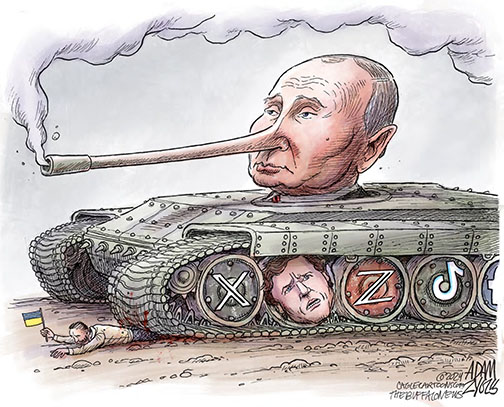
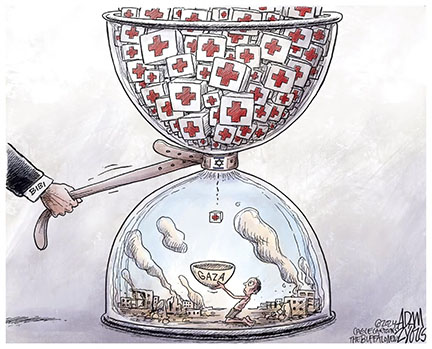
This year’s winner was Adam Zyglis of The Buffalo News. Zyglis’ portfolio demonstrated creativity, clarity and urgency and consistently evoked an emotional response, particularly when addressing challenging issues like international conflict and national politics, Headliners judges said.
Click here to view more of the cartoons from Zyglis’ winning entry.
 We have thoughtful standards in selecting the best cartoonist each year. Our guidelines are descended from former Headliners chairman and longtime judge John Sweeney, who headed the editorial page for the Wilmington (Delaware) News Journal for many years. Sweeney’s advice for judges goes like this:
- We live in a hyper-partisan society. Recognize your own prejudices. If you feel a tingle every time you see an ‘Orange Man Bad’ cartoon or automatically snicker at every ‘Dumb Slow Joe’ caricature, then you are letting your prejudices judge for you.
- Many cartoons are political. That’s why they are there. But we shouldn’t vote for a cartoonist for political reasons. We don’t have to agree with it. We should appreciate the craft behind the cartoon.
- Go by the rules of the craft. Just as a sportswriter shouldn’t slant a story for his favorite team, the judge should weigh the cartoonist’s idea, reasoning, creativity, artistry, originality and use of language.
- You either like the cartoonist’s style or you don’t. Some people are sloppy and go too quickly. But if you’re pondering what the artist means, well, it shouldn’t take you so long.
- Biden or Trump will look a certain way. That’s fine. It can be inviting, or funny … that’s OK. The question is, Does it work?
- Cliches are another thing. Note first-level creativity. Back when Jim Henson died, there were a lot of Big Bird or Ernie cartoons with a tear coming down their faces. Rows of tombstones and flags on Memorial Day may be appropriate, but they usually aren’t award-winning cartoons. Look for something different.
- A cartoon should have a point. When we’re looking at an editorial cartoon, it should come across quickly. If there is a degree of difficulty in getting the joke, you should be rewarded for the effort.
- You may stare blankly for a couple of seconds, then break out laughing. Just like a trick lede on a story, the ideal reaction is the urge to point out the cleverness to someone else. If you don’t get that feeling, then the difficult point, just like a difficult lede, fails.
- Look for second-thought creativity. If every political point reflects the same, conventional liberal or conventional conservative point of view, it takes away from the cartoon. You want to be surprised and laugh out loud. You want to shout for joy when you agree or you want to cry ‘Ouch!’ if you disagree.
- Above all, we have to treat cartoonists as craftsmen.